Tennis API Coverage
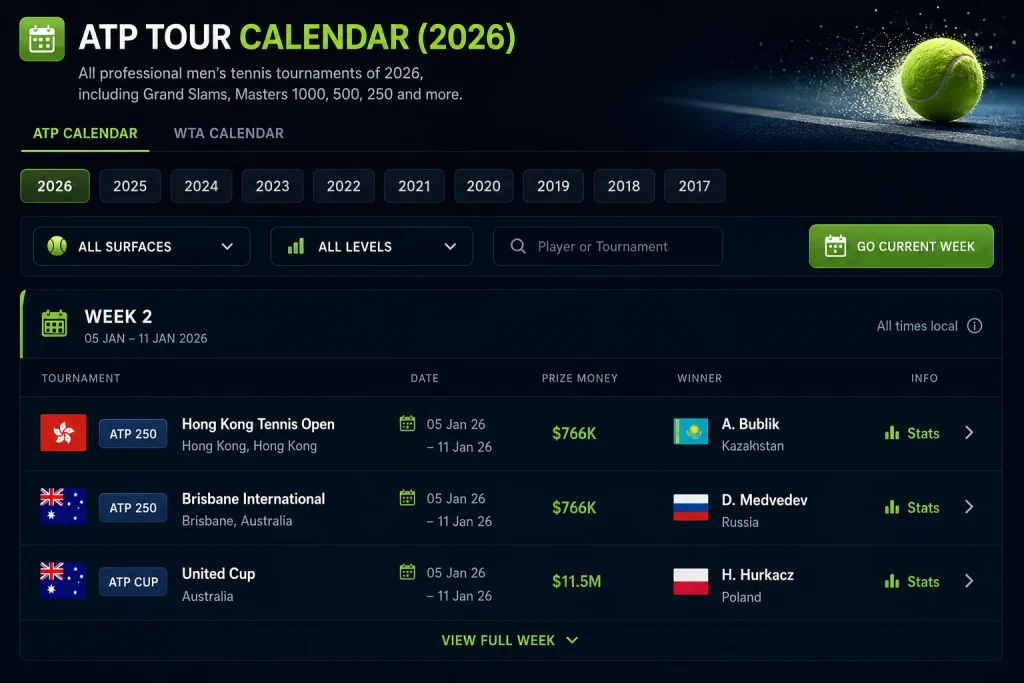
Build tennis products with ATP, WTA, ITF and Challenger data covering live scores, fixtures, rankings, player profiles, head-to-head records, draws, results, predictions, odds, point-by-point data and historical tennis coverage.
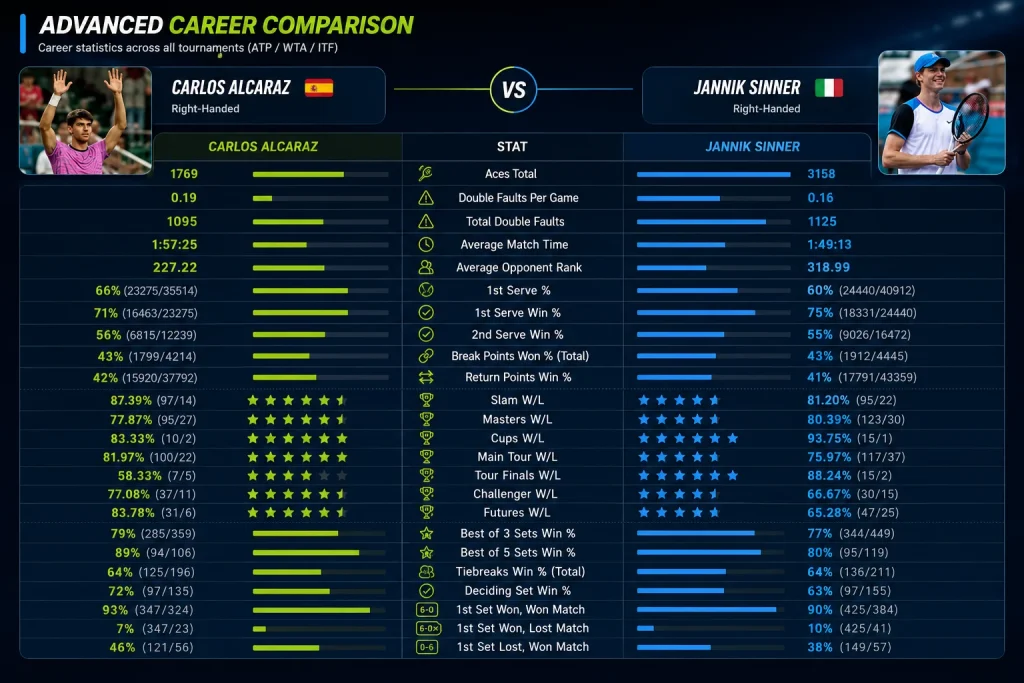
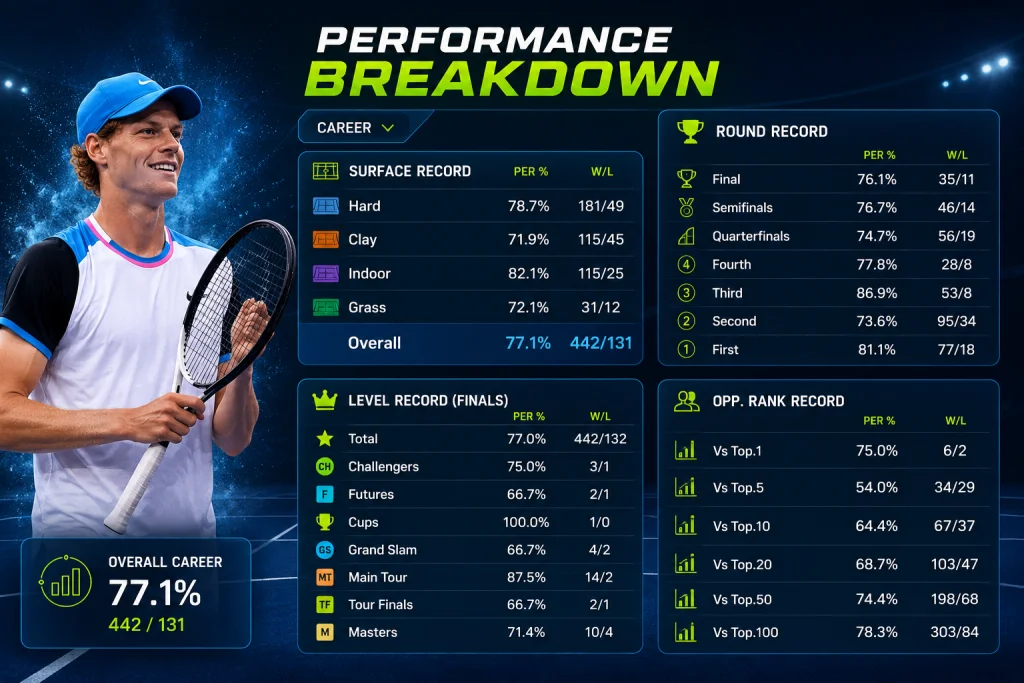
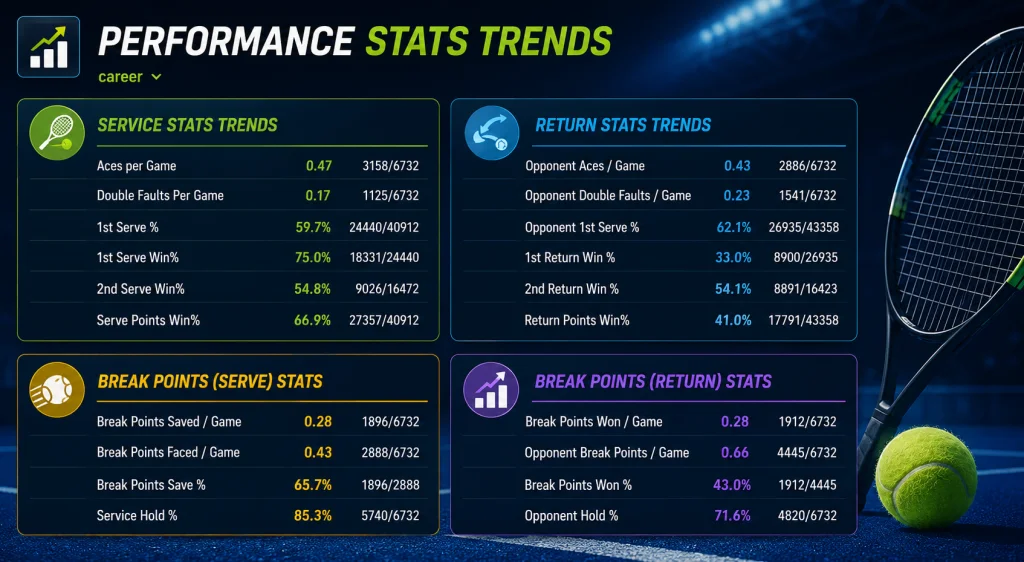
The API also includes a huge range of player performance and comparison statistics, making it ideal for live score apps, betting research tools, prediction models, tennis databases, sports media pages and AI-powered tennis products.
Access Tennis WebSocket data for real-time match timelines, live scores, live odds and point-by-point updates. Historical coverage includes historical odds and long-term ATP/WTA match data.
View all available endpoints in the API documentation.
{
  "match_id": "wimbledon-2026-qf-01",
  "tour": "ATP",
  "tournament": "Wimbledon",
  "round": "Quarter Final",
  "surface": "Grass",
  "status": "Scheduled",
  "players": [
    {
      "player_id": "alcaraz-carlos",
      "name": "Carlos Alcaraz",
      "rank": 2,
      "country": "ESP"
    },
    {
      "player_id": "sinner-jannik",
      "name": "Jannik Sinner",
      "rank": 1,
      "country": "ITA"
    }
  ],
  "available_data": [
    "fixtures",
    "rankings",
    "h2h",
    "odds",
    "historical_results"
  ]
}
What This Coverage Page Means
Tennis data coverage is not just about the number of matches in a database. For developers, useful coverage means reliable entities, connected datasets, clear match status, stable player records, tournament context, historical depth and API responses that can be used in real products.
This page explains the major coverage areas available through Tennis-API.com and how those datasets can be used in production applications. Exact endpoint availability, response fields, rate limits and historical depth can vary by plan and endpoint, so developers should confirm implementation details in the documentation before launch.
Compare Tennis API Access
From core tennis data to advanced stats, predictions, odds, live scores and real-time Socket.IO updates.
TENNIS API PLANS
FreeTrial
|
Pro$29/mo
Starter
|
Ultra$59/mo
Full REST
|
Mega$99/mo
Everything + WebSocket
|
|
|---|---|---|---|---|
| 📋 PLAN SUMMARY | ||||
| Best for | Testing | Prototypes & small sites | Production apps | Live & betting products |
| Requests | 50 / day | 150,000 / month | 1,200,000 / month | 3,800,000 / month |
| Rate limit | 4 req/sec | 10 req/sec | 25 req/sec | 50 req/sec |
| Overage | Hard limit | $0.003 / extra request | $0.003 / extra request | $0.003 / extra request |
| 🗄️ CORE DATA | ||||
| Fix & results | ✔ Yes | ✔ Yes | ✔ Yes | ✔ Yes |
| Live scores | ✔ Yes | ✔ Yes | ✔ Yes | ✔ Yes |
| Rankings | ✔ Yes | ✔ Yes | ✔ Yes | ✔ Yes |
| Profiles | Basic | Basic | Full | Full |
| Tour. data | Basic | Basic | Full | Full |
| Search / lookup | ✔ Yes | ✔ Yes | ✔ Yes | ✔ Yes |
| 📈 ANALYTICS | ||||
| Basic H2H summary | ✔ Yes | ✔ Yes | ✔ Yes | ✔ Yes |
| Adv. player stats | ✖ No | ✔ Yes | ✔ Yes | ✔ Yes |
| Adv. H2H stats | ✖ No | ✔ Yes | ✔ Yes | ✔ Yes |
| Filter stats (surf / time / level) | ✖ No | ✔ Yes | ✔ Yes | ✔ Yes |
| 💎 PREMIUM DATA | ||||
| Odds (pre-match & live) | ✖ No | ✖ No | ✔ Yes | ✔ Yes |
| Odds move / hist | ✖ No | ✖ No | ✔ Yes | ✔ Yes |
| Predictions | ✖ No | ✖ No | ✔ Yes | ✔ Yes |
| PBP & timeline | ✖ No | ✖ No | ✔ Yes | ✔ Yes |
| Websocket live | ✖ No | ✖ No | ✖ No | ✔ Yes |
Coverage Summary
Tennis-API.com is built around the core datasets developers typically need for tennis products: matches, players, rankings, tournaments, odds, H2H records and historical results.
| Coverage Area | Included Data Examples | Typical Product Use |
|---|---|---|
| Live scores and fixtures | Match status, scheduled matches, live matches, completed results | Live score apps, match centres, tournament pages |
| Player profiles | Player identity, rankings, nationality, recent results, career context | Player pages, fantasy products, analytics tools |
| Rankings | ATP/WTA ranking tables, movement, points, ranking snapshots | Ranking pages, previews, prediction features |
| Head-to-head records | Past meetings, win split, recent matches, surface context | Match previews, betting research, SEO pages |
| Tournament data | Draws, schedules, rounds, surfaces, event context | Tournament hubs, brackets, archive pages |
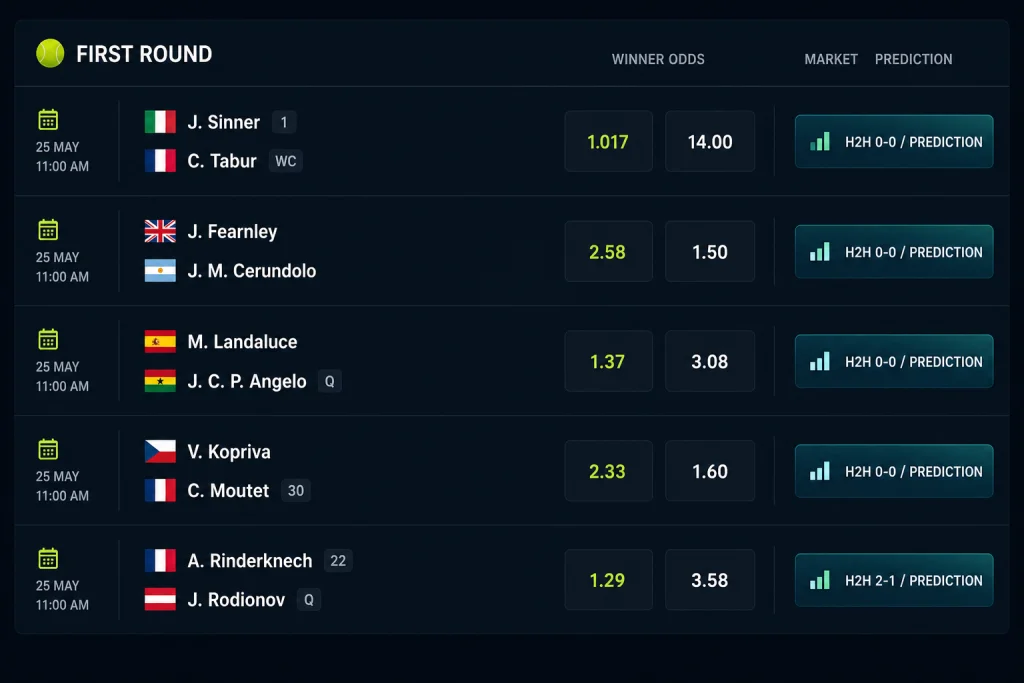
| Odds data | Pre-match odds, market context, historical prices where available | Betting dashboards, model benchmarking, odds pages |
| Historical archives | Past matches, scores, tournament results, player history | AI models, backtesting, research, historical SEO pages |
Everything Included in the Tennis API
Live Scores
Retrieve live and scheduled tennis matches with match status, tournament context, player information and score progression where available.
Player Profiles
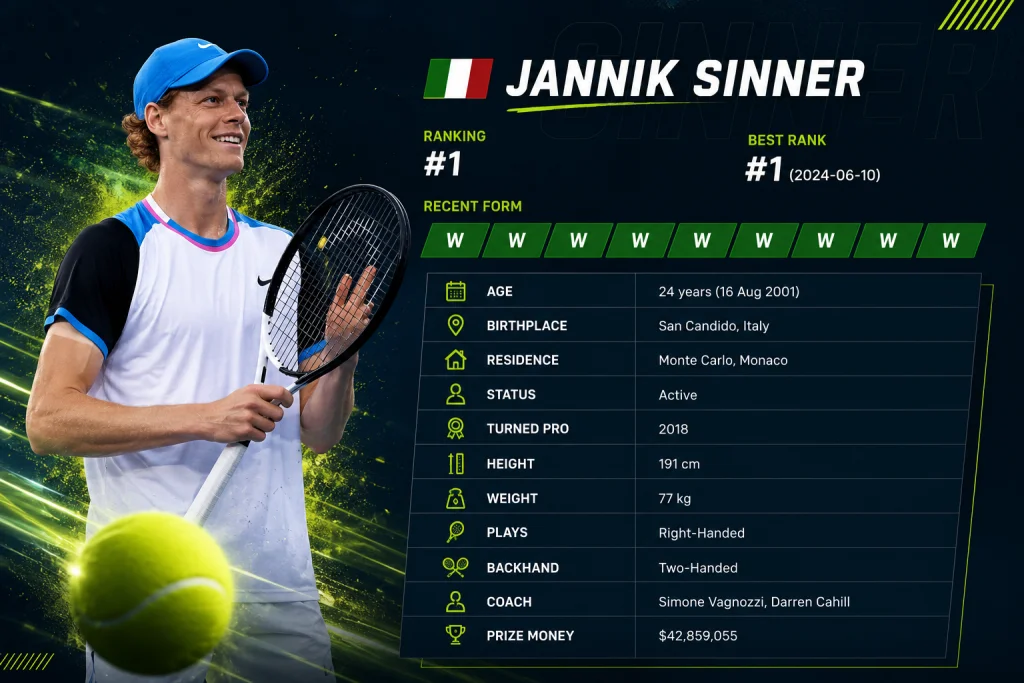
Build player pages using profile data, rankings, recent matches, historical records, surface context and tournament performance.
Head-to-Head Data
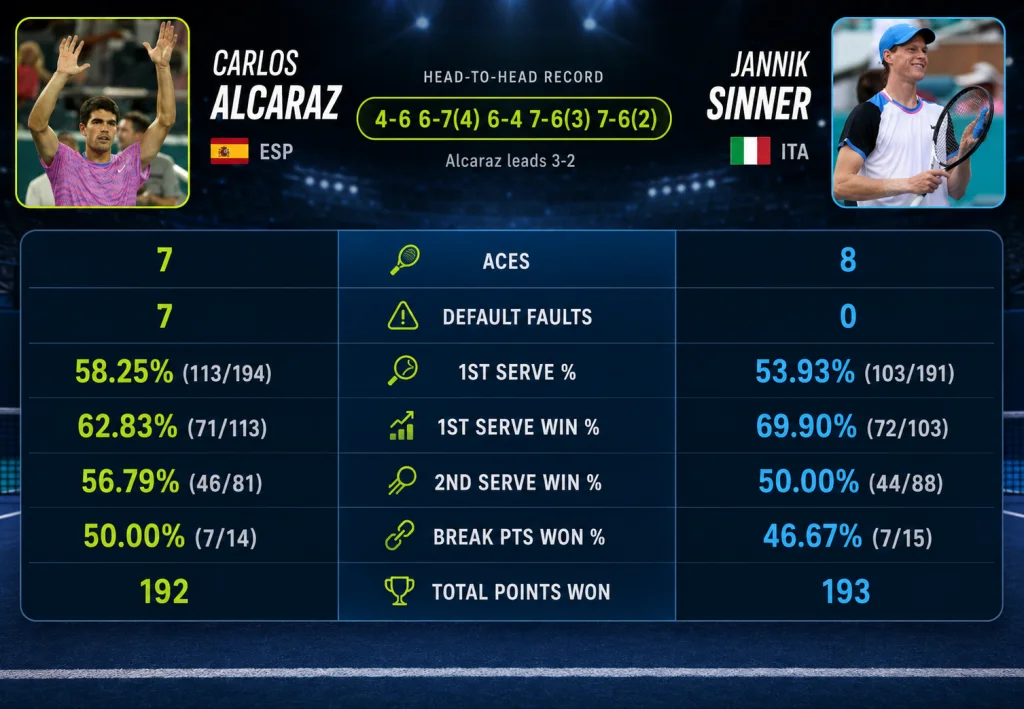
Compare players using past meetings, matchup records, surface splits, recent encounters and tournament context.
Tournament Draws
Create tournament pages with brackets, draw structure, fixtures, completed results, player paths and event metadata.
Rankings Data
Access ATP and WTA ranking data, ranking movement and ranking context. Developers can compare this with public ranking references such as official WTA singles rankings.
Historical Archives
Use historical tennis results for player research, tournament archives, prediction models, backtesting and long-term analytics.
Tour and Competition Coverage
Tennis products often need more than one tour. A complete tennis application may require ATP and WTA live scores, ITF data for lower-level coverage, Challenger results, Grand Slam tournament pages and historical archives.
| Competition Type | Why It Matters | Common Product Features |
|---|---|---|
| ATP | Men’s professional tennis, including major tour events and elite player data. | Live scores, rankings, player pages, H2H, odds, match previews |
| WTA | Women’s professional tennis, including ranking and tournament coverage. | Rankings pages, player profiles, tournament hubs, match centres |
| ITF | Important for deeper player development, lower-level events and broader tennis databases. | Prospect tracking, historical research, live score depth |
| Challenger | Useful for tracking rising ATP players before they reach the top tour. | Player development, betting research, scouting, rankings context |
| Grand Slams | High-demand events with major traffic, ranking impact and historical importance. | Tournament pages, draws, live scores, predictions, archives |
Player Profiles and Career Statistics
Player data is one of the most important building blocks in a tennis API. Scores, rankings, H2H records, odds and tournament results all become more useful when they connect to stable player records.
{
  "player_id": "sinner-jannik",
  "player": "Jannik Sinner",
  "ranking": 1,
  "country": "ITA",
  "career_titles": 18,
  "surface_stats": {
    "hard": 82.4,
    "clay": 71.2,
    "grass": 79.3
  },
  "recent_form": ["W", "W", "W", "L", "W"]
}
Why Player Entities Matter
Player names can be formatted differently across sources, languages and pages. Stable player IDs make it easier to connect rankings, matches, H2H records, odds, statistics and historical archives without creating duplicate records.
For SEO and UX, player profile pages should include current ranking, recent results, upcoming matches, tournament context and internal links to related H2H, rankings and live score pages.
Historical Tennis Data Coverage
Historical data is essential for analytics, AI models, player research, tournament archives and betting analysis. A live score feed tells you what is happening today; historical data helps you understand whether what is happening today is meaningful.
Historical tennis datasets can support:
- Historical ATP, WTA, ITF and Challenger match archives where available
- Player match history and career-level result records
- Ranking history and ranking movement over time
- Surface-based performance analysis
- Head-to-head rivalry records and previous meetings
- Tournament archive pages and year-by-year results
- Backtesting for prediction models and betting research
- AI-generated summaries grounded in historical facts
Coverage by Dataset Type
Different products need different tennis datasets. Use this table to decide which coverage areas matter most for your application.
| Dataset | Most Important Fields | Best-Fit Use Cases |
|---|---|---|
| Fixtures | match_id, start time, tournament, round, players, status | Daily schedules, tournament pages, mobile apps |
| Live scores | set score, game score, match status, server, last updated | Live score apps, widgets, match centres |
| Rankings | rank, points, movement, ranking date, player ID | Ranking pages, player profiles, previews |
| H2H | meetings, wins, recent matches, surface splits, scores | Match previews, betting tools, SEO pages |
| Odds | market, selection, price, timestamp, opening/closing context | Sportsbooks, betting research, prediction benchmarking |
| Historical results | date, winner, loser, score, surface, tournament, round | AI models, archives, research, analytics |
| Tournament draws | round, bracket path, seeds, fixtures, completed results | Tournament hubs, bracket pages, event analysis |
Compare players using historical H2H records, recent meetings, surface context, rankings and matchup trends.
Build player profiles with ranking history, recent form, career records, tournament performance and related match data.
Create tournament draw pages with rounds, fixtures, results, seeds and links to player and match pages.
Display daily schedules with odds, rankings, player context, live score status and tournament filters.
Production Guidance for Developers
Coverage quality also depends on implementation quality. Even strong tennis data can produce weak products if the application does not cache correctly, handle match states or connect related records.
Use Stable IDs
Store player, match and tournament IDs where available so rankings, H2H records, odds and historical results connect reliably.
Separate Live and Stable Data
Refresh live matches frequently, but cache player profiles, historical results and tournament metadata longer where permitted.
Handle Match Status Correctly
Display scheduled, live, completed, retired, walkover, delayed and suspended matches with clear labels.
Show Data Freshness
Use “last updated” timestamps for live scores, odds, rankings and prediction pages where freshness affects user trust.
Test Your Required Tours
Before launch, test the exact tours, events, markets and fields your product depends on.
Plan for Major Events
Grand Slams and finals can create traffic spikes. Use caching, background jobs and efficient frontend updates.
SEO and Programmatic Tennis Content Coverage
Tennis API coverage can support SEO pages, but API data alone is not enough. Search engines and users reward pages that are accurate, useful, clearly labelled and supported by context.
| Page Type | Data Needed | Quality Requirement |
|---|---|---|
| Player pages | Ranking, recent results, profile data, upcoming matches | Add summaries, internal links and latest update context. |
| H2H pages | Past meetings, surface splits, recent matches, current rankings | Explain sample size, recency and surface relevance. |
| Ranking pages | Rank, points, movement, ranking date | Show update date and link to player pages. |
| Tournament pages | Schedule, draw, results, surface, round | Separate upcoming, live and completed matches clearly. |
| Prediction pages | Probability, form, rankings, H2H, odds context | Use responsible probability wording and avoid guarantees. |
| Historical archives | Past results, tournament records, player history | Use canonical URLs, dates and unique explanatory content. |
Example API Products You Can Build
Live Score Websites
Use fixtures, live scores, player context, tournament pages and match status to build real-time tennis score products.
Sportsbook Tools
Combine odds, rankings, H2H records, live scores and historical results for betting research and trading dashboards.
Fantasy Tennis Apps
Use player profiles, schedules, rankings and results to power fantasy scoring and player evaluation.
AI Prediction Systems
Use historical results, rankings, form, H2H, surfaces and odds context as structured inputs for model workflows.
Sports Media Platforms
Create ranking pages, match previews, tournament hubs, player profiles and archive content.
Analytics Dashboards
Track player performance, surface trends, ranking movement, event form and tournament-level statistics.
Coverage Claims and Verification
EEAT-quality API pages should be specific, testable and transparent. Instead of relying only on broad claims, developers should be able to verify the API against their own product requirements.
Before going live, test:
- the exact endpoints required by your product;
- the tours and tournament levels your users care about;
- whether historical depth matches your analytics or SEO needs;
- response fields for player IDs, match IDs and tournament IDs;
- rate limits, monthly request volume and bandwidth requirements;
- how live scores, odds and rankings update in real workflows;
- how retirements, walkovers, delays and suspended matches are represented.
Frequently Asked Questions
What tennis data does the API cover?
The API is built for ATP, WTA, ITF and Challenger tennis use cases, including live scores, fixtures, rankings, player profiles, H2H records, tournament data, odds context and historical match results.
Does the API include live tennis scores?
Yes. Live scores and fixture data can be used to power match centres, scoreboards, mobile apps and sports media pages.
Does the API include ATP and WTA rankings?
Yes. Rankings data can be used for ranking pages, player profiles, match previews, analytics and prediction workflows.
Does the API include historical tennis data?
Yes. Historical tennis data can support player research, tournament archives, backtesting, AI models and long-term analytics. Developers should verify exact historical depth for their required tours and endpoints.
Can the API be used for betting tools?
Yes. Odds, rankings, H2H records, live scores and historical results can support betting research tools, sportsbook dashboards and model benchmarking. Betting products should follow applicable laws and responsible gambling requirements.
Can the API support SEO pages?
Yes. The API can support player pages, rankings pages, H2H pages, tournament pages and historical archives. For SEO quality, pages should include context, dates, internal links and useful analysis rather than only raw data.
What format does the API return?
The API uses REST endpoints and structured JSON responses.
How should developers verify coverage?
Developers should review the documentation, test the exact endpoints they need and confirm that the response fields, tours, historical depth and request limits match their production use case.
Start Building with Professional Tennis Data
Access ATP, WTA, ITF and Challenger tennis data through a developer-friendly Tennis API built for live scores, rankings, H2H, odds, historical archives, analytics and AI products.
To see examples of tennis stats, player pages, live scores and matchup datasets powered by this data ecosystem, visit Matchstat.com.
Detailed API documentation is available at: tennisapidoc.matchstat.com
For public reference data, developers may also compare rankings and statistics against official sources such as the ATP statistics page and WTA singles rankings.